
A decision that should never be improvised
Replacing a roof is one of the most expensive residential projects there is, which pushes many homeowners to put the decision off until a leak forces their hand. The problem is that a replacement planned in advance generally costs less — and causes far less stress — than an emergency repair after water damage. Here are the concrete signs to watch for, so you can decide before the decision is made for you.
7 signs it is time to replace your roof
- •Granule loss — black grit collecting in the gutters signals the shingle is wearing out fast.
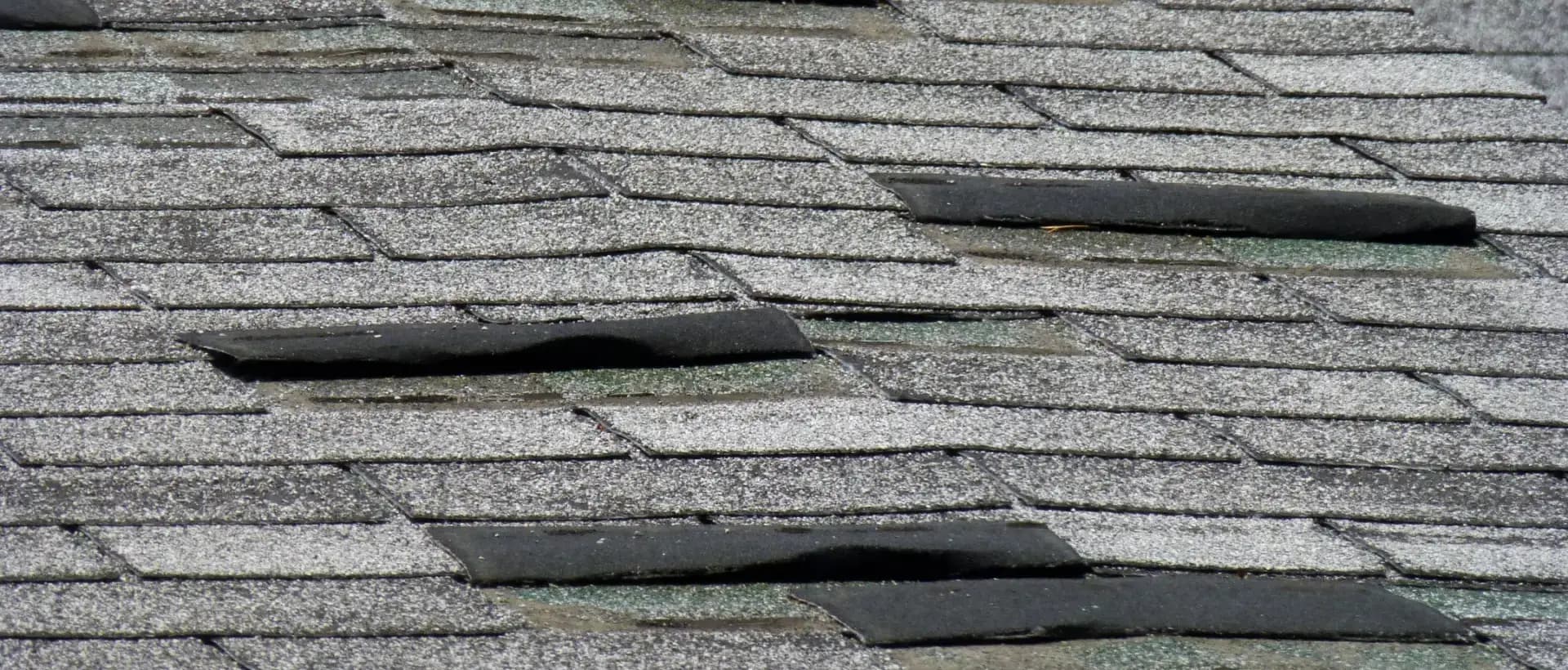
- •Shingles curling or cupping at the corners — a classic end-of-life sign.
- •Missing shingles — sections torn off by wind expose the deck directly.
- •Repeated leaks — water stains that come back despite spot repairs point to a wider problem.
- •A roof over 20 to 25 years old — past that age the failure rate climbs quickly, even with no visible symptom.
- •Visible sagging — rarer, but a serious sign of a structural problem in the deck.
- •Moss or growth on the roof — signals prolonged moisture retention, especially common on shaded slopes.
Why these signs appear
Most of these symptoms share one cause: the gradual loss of the shingle's protective layer. The granules covering an asphalt shingle protect it from UV and mechanical wear — once they come away in quantity, the asphalt underneath dries out and turns brittle, which is what produces the curling and the cracking at the corners.
Moss and growth, for their part, hold moisture against the shingle surface long after it has rained, accelerating its breakdown — something we see particularly often on north-facing slopes or those shaded by mature trees.
Need a hand with your own roofing project?
Age is not the only factor that counts
Two roofs of the same age can be in very different condition depending on the quality of the original installation, the attic ventilation and exposure to weather. A well-ventilated roof sheltered from high wind can outlast its theoretical service life. Conversely, unbalanced ventilation can age a shingle prematurely, even on a relatively young roof.
That is why one isolated sign does not always justify a full replacement — but several signs appearing together is a good indicator that it is time to act.
Targeted repair or full replacement: how to decide
- •One or two isolated signs, over a limited area: a targeted repair is often enough.
- •Three or more signs, combined with a roof approaching 20 years: replacement generally becomes the better value over the medium term.
- •Leaks in several different places: a sign the system as a whole is reaching the end of its life, not just one area.
- •A roof never replaced since construction, whatever its apparent condition: an inspection is warranted to confirm the real state of the deck.
The short version
One or two mild signs can often be handled with a targeted repair. Three or more, combined with a roof approaching 20 years, generally justify a serious assessment with replacement in mind.