
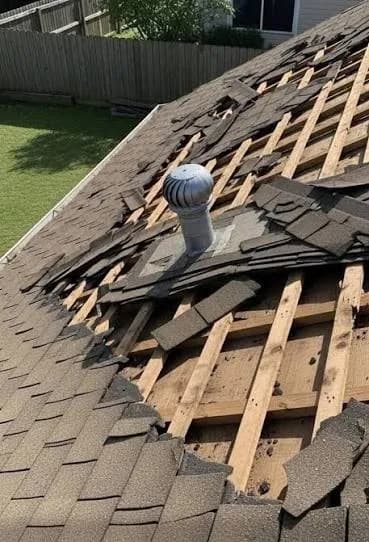
A leak is rarely where you think it is
Water getting in through a roof does not run straight down. It usually follows the path of least resistance along a rafter or a membrane, and can show up inside the house several metres from where it actually entered the roof. That is why a stain on the living room ceiling can originate near a chimney or a vent somewhere else entirely.
Recognising the signs early — before a stain becomes visible — is the difference between a minor repair and expensive damage to insulation, framing or interior finishes.
Signs inside the house
- •Yellowish or brown stains on the ceiling, particularly on the top floor
- •Paint or wallpaper blistering or peeling near the ceiling
- •A persistent musty smell, even with no visible stain
- •Visible mould in ceiling corners or near dormers
- •Cracking or slight softness in the ceiling to the touch, a sign of waterlogged drywall
Signs in the attic
- •Daylight visible through the roof, between the deck boards
- •Insulation damp or compacted in places
- •Wood discoloured, blackened or soft to the touch
- •Mould on the framing or the deck
- •Unusual frost or ice on the underside of the deck in winter
Signs outside
- •Shingles missing, lifted or visibly damaged
- •Flashing coming away around a chimney, vent or dormer
- •Gutters overflowing or badly fastened
- •Icicles or a pronounced ice dam in winter
- •Shingle granules collecting on the ground after rain or high wind
Need a hand with your own roofing project?
The most common entry points
In our experience, the large majority of leaks do not come from the field of shingles itself but from the penetrations: chimney flashing, plumbing vents, skylights and the valleys where two slopes meet. Those areas need sealant and flashing done properly — one neglected detail at any of them is enough to create a leak that can take months to become visible inside.
On a flat roof, the drains and parapet upstands play the same critical role: they are the first places to check when a leak is suspected on a Montreal duplex or triplex.
Home insurance and leaks
Most home insurance policies cover sudden and accidental damage — a leak caused by a storm, for instance — but generally exclude damage tied to prolonged lack of maintenance, such as a roof never inspected for years. Documenting your roof's condition with dated photos, before a problem arises, can make a claim easier the day something actually happens.
What to do if you find a leak
Put a container down to limit damage to the floor, take photos for your file, and avoid climbing onto the roof yourself — a damaged or wet roof is dangerous. Contact a roofer quickly for an inspection: the faster the response, the more the secondary damage (soaked insulation, mould) stays contained.
The short version
The water's entry point on the roof is almost never directly above the visible stain on your ceiling. A professional inspection remains the most reliable way to find the real source.