
Understand the cause, not just the symptom
Spotting a leak is one thing — understanding why it happened is another. A repair that only addresses the visible symptom, without correcting the real cause, has a good chance of letting the problem come back. This article covers the causes we see most often on Greater Montreal roofs, so you understand what an inspection is actually trying to confirm.
The most common causes
- •Flashing that has come away or was badly fitted around a chimney, vent or dormer
- •Shingles at the end of their useful life, weakened by age and UV
- •Ice building up at the roof edge, forcing water back under the shingles
- •Nails driven badly or backing out ("nail pops"), creating a direct entry point
- •Unbalanced attic ventilation, which accelerates shingle wear and encourages condensation
- •Blocked gutters pushing water back toward the deck
- •Damage from a branch or debris falling on the roof
- •A badly executed original installation, even on a relatively young roof
Why flashing is the most frequent weak point
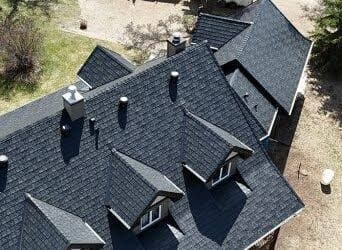
The field of shingles itself is rarely the source of a leak — it is almost always the penetrations that give way first: chimney flashing, plumbing vents, skylights and the valleys where two slopes meet. Those areas need sealant and flashing executed precisely, and one neglected detail at any of them is enough to create a leak that can take months to become visible inside.
Need a hand with your own roofing project?
Age does not explain everything
Two roofs of the same age can age very differently depending on the quality of the original installation and how balanced the attic ventilation is. Unbalanced ventilation traps heat and moisture under the shingle, accelerating its wear well beyond what age alone would suggest — a badly ventilated 12-year-old roof can show more fatigue than a well-ventilated 18-year-old one.
Causes specific to Montreal's climate
The frequent freeze-thaw cycles of a Quebec winter encourage ice dams, a particularly common cause of leaks between January and March. On Montreal's many flat-roofed plexes, drains blocked by ice or debris play a similar role, preventing meltwater from draining rather than concentrating it at the edge as on a pitched roof.
Montreal's building stock itself also plays a part: a good share of the city's plexes and triplexes predate the 1980s, a generation of construction where attic ventilation was often less generous than it is today. That structural factor partly explains why some older neighbourhoods report more leaks than areas with newer stock, independent of how well any individual property is maintained.
The short version
Most leaks come from one specific penetration — flashing, a vent, a drain — rather than from the field of shingles. An inspection sets out to identify that exact cause, not just confirm that a leak exists.