
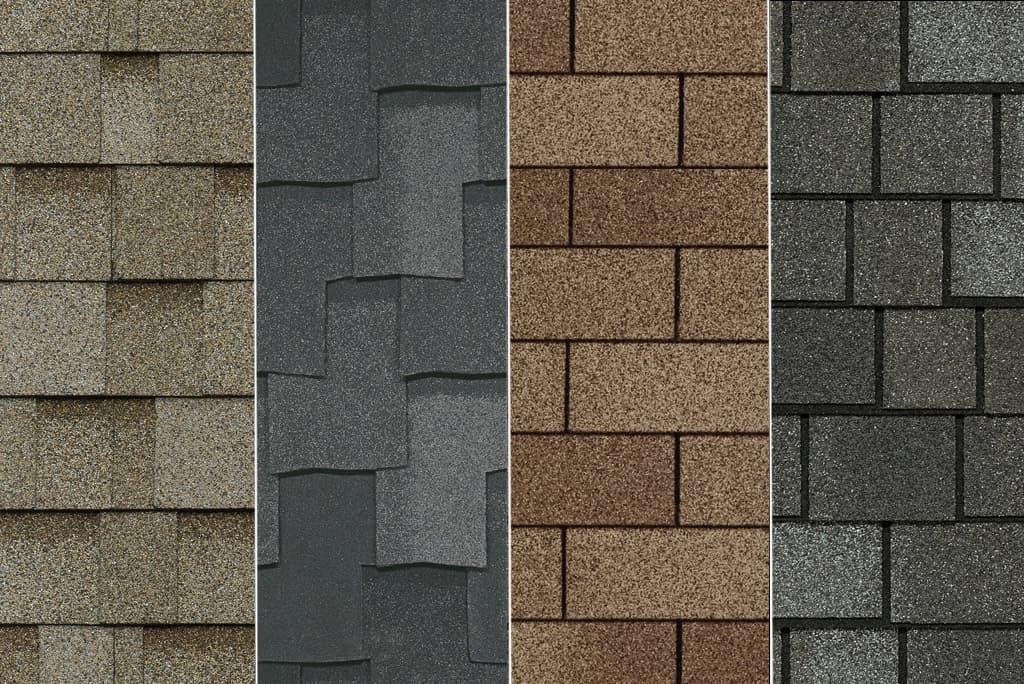
Two families of shingle, the same base material
The 3-tab shingle and the architectural shingle are both made from asphalt and protective granules, but their construction differs enough to change a roof's appearance, durability and price. Understanding that difference helps you choose on your actual priorities rather than on the first price you see.
The 3-tab shingle: simple and uniform
The 3-tab shingle takes its name from the three cutouts that create a flat, regular pattern once laid, each shingle having a uniform thickness across its whole surface. It is the historic style of residential asphalt shingle, lighter and generally cheaper to buy than architectural. Its useful life and wind resistance are more limited, however, and the major manufacturers offer it less and less as they concentrate their ranges on architectural products.
The architectural shingle: thicker, more textured
The architectural shingle (also called dimensional or laminated) is made of two or more layers of asphalt pressed together, creating relief across the roof surface once laid — an effect that mimics wood shake or slate. That multi-layer construction makes it heavier and generally more resistant to high wind than an equivalent 3-tab, and it usually carries longer manufacturer warranties.
The differences at a glance
- •Appearance: flat and uniform for 3-tab, textured and dimensional for architectural
- •Weight: the architectural shingle is heavier thanks to its multiple layers
- •Wind resistance: generally better for architectural, thanks to its laminated construction
- •Service life: manufacturer warranties are usually longer on architectural
- •Purchase price: 3-tab generally costs less to buy, architectural more
- •Availability: several major manufacturers are gradually reducing their 3-tab range
Need a hand with your own roofing project?
Is 3-tab still worth it?
For a tight budget or an outbuilding where appearance matters less than on a main residence, the 3-tab shingle remains a functional option. But for a primary home the price gap with an entry-level architectural shingle has narrowed over the years, which makes architectural attractive even on a tight budget — the difference in total cost across the roof's life often favours architectural once you account for its greater durability.
Why architectural became the standard
Beyond appearance, many homeowners choose architectural for the resale value it adds — a roof with relief gets noticed favourably, unlike a flat shingle that visually dates a house. It is also what we recommend by default for the large majority of residential projects, barring a particular budget situation worth discussing directly with you when we quote.
One detail to consider on a replacement
If you are replacing an existing 3-tab roof with architectural, the extra weight is generally not a problem for a standard residential frame, but it is worth mentioning at the inspection if your property has an unusual configuration. The additional thickness can also slightly change the look of the rakes and ridge caps, a minor aesthetic detail our roofers normally adjust for without difficulty during installation.
The short version
The architectural shingle costs more to buy, but its weight and layered construction generally give it better wind resistance and a longer life than 3-tab — a gap that often closes on the roof's total cost.